
How Does Music Licensing Work

Audiodrome is a royalty-free music platform designed specifically for content creators who need affordable, high-quality background music for videos, podcasts, social media, and commercial projects. Unlike subscription-only services, Audiodrome offers both free tracks and simple one-time licensing with full commercial rights, including DMCA-safe use on YouTube, Instagram, and TikTok. All music is original, professionally produced, and PRO-free, ensuring zero copyright claims. It’s ideal for YouTubers, freelancers, marketers, and anyone looking for budget-friendly audio that’s safe to monetize.
People know they need permission to use music, but the details blur fast. A YouTuber hears “royalty-free” and thinks the track is safe everywhere. A marketer buys a song and assumes that purchase equals usage rights. Then a platform claim shows up and everything feels random.
The confusion usually comes from four places at once: who owns which rights, what license model you actually have, what a platform allows inside its own tools, and what proof you can show when a claim appears. Miss one piece and a perfectly normal project can turn into a scramble.


What music licensing means
Music licensing means permission to use music in a specific way. The license tells you what you can do, where you can publish, and what limits apply. Think of it as written clearance tied to a project, not a general approval.
Buying a track and licensing a track are different actions. A download gives you the audio file for editing, but music rights live in the license agreement. If your plan includes ads, client delivery, or repurposing, the license scope drives the safe choice.
“Royalty-free” needs a clear reset for creators and teams. It often means you avoid paying per-play royalties, but the track still sits under copyright. The license sets boundaries, and platforms also apply their own rules during upload and review.
Why music licensing gets confusing
One song can involve multiple rights held by different parties. The composition can belong to a songwriter or publisher, while the recording can belong to a label or recording owner. A license can cover one side, both sides, or leave a gap.
Platform rules and copyright law overlap, but they function as separate systems in practice. YouTube’s Content ID can match audio automatically and apply a claim based on similarity. Your license helps, and you still need proof for disputes.
Proof matters even when you chose music correctly. Platforms, clients, and ad reviewers often ask for receipts, license terms, and track details because those documents connect your project to a valid permission chain. Clear proof shortens back-and-forth and reduces downtime.
The four things people need to check before using music
Start by naming the rights involved in your specific use. Video needs sync rights, a recording needs master rights, and audio-only distribution can pull in mechanical rights. When you map rights early, you spot gaps before you commit to an edit that cannot ship.
Next, confirm the license model you actually have, not the marketing label. A subscription, a rights-managed license, and a royalty-free license can all look similar on a checkout page. The difference shows up when you move from organic posts to paid ads or client delivery.
Then confirm where you plan to use the track, including repurposes. A Reel can become a YouTube Short, then a website hero video, then a paid placement. Each jump changes risk, so keep a list of channels and formats before you lock the music.
Finally, confirm what proof and metadata your platform or client will ask for. Keep receipts, license text, and track details ready. For a quick scope check, run the Music License Wizard.
Visual suggestion: checklist graphic – a four-box “Rights / License model / Where it publishes / Proof pack” checklist with examples for YouTube, Meta ads, podcasts, and client handoff.
The basic rights map
The fastest way to stay calm is to learn the four core rights categories. You will see these terms in licenses, platform disputes, and client questions. When you understand what each right controls, you can read a license in minutes and spot missing coverage.
Sync covers using music with visuals, including video, ads, motion graphics, and slides. If your project includes any image sequence, you are syncing the track to that media. That is why sync shows up in creator workflows like Reels, YouTube videos, and product explainers.

Master rights cover the sound recording you actually hear. If you use a specific recording, you need permission from the recording owner, even if the composition is public domain. Master rights show up in stock libraries, label catalogs, and any license that names “recording” or “master.”

Mechanical rights cover reproducing and distributing a composition in audio-only form, like downloads, interactive streams, or CDs. This matters for podcasts, music apps, and audio-first products. If your project ships as an audio file people can replay without visuals, mechanical rights can enter the picture.

Performance rights cover public playback of the composition, like broadcasts, venues, or online streams. These rights often run through performing rights organizations, and the venue or platform may hold blanket coverage. Still, some projects need direct clearance, especially for branded events and long-running installations.

Publishing rights cover the composition side, and neighboring rights cover certain performer and recording interests in some regions. Derivative works rules can matter when you add vocals, remix, or build a new track from stems. If your project relies on heavy edits, confirm the license allows adaptation.
Music Rights Map: Composition Side vs Recording Side
Composition side (Songwriting)
melody + lyrics, owned by songwriter/publisher
Recording side (Master audio)
the exact recorded performance, owned by label/artist/producer
Sync (composition)
Permission to pair music with visuals
YouTube video, Instagram Reel, product ad, slideshow
Sync (master)
Permission to pair music with visuals
YouTube video, Instagram Reel, product ad, slideshow
Mechanical
Permission to reproduce and distribute audio
Podcast episode audio, downloadable audio program, streaming audio release
Master reproduction
Permission to reproduce and distribute audio
Podcast episode audio, downloadable audio program, streaming audio release
Performance
Permission for public playback or transmission
In-store music, live event playback, livestream with background music
Public playback of recording
Permission for public playback or transmission
In-store music, live event playback, livestream with background music
Composition side (Songwriting)
melody + lyrics, owned by songwriter/publisher
Sync (composition)
Permission to pair music with visuals
YouTube video, Instagram Reel, product ad, slideshow
Mechanical
Permission to reproduce and distribute audio
Podcast episode audio, downloadable audio program, streaming audio release
Performance
Permission for public playback or transmission
In-store music, live event playback, livestream with background music
Recording side (Master audio)
the exact recorded performance, owned by label/artist/producer
Sync (master)
Permission to pair music with visuals
YouTube video, Instagram Reel, product ad, slideshow
Master reproduction
Permission to reproduce and distribute audio
Podcast episode audio, downloadable audio program, streaming audio release
Public playback of recording
Permission for public playback or transmission
In-store music, live event playback, livestream with background music
Real project examples
Common projects → what you usually need
- YouTube video: Sync (composition) + Sync (master)
- Paid ad: Sync (composition) + Sync (master) + clear commercial scope
- Podcast: Mechanical (composition) + Master reproduction (recording)
- In-store playback: Performance coverage (composition) + public playback considerations
The main licensing models
Licenses come in a few common models, and each model changes how you pay and how you prove permission. When you can name the model, you can also predict where restrictions will show up. That makes it easier to pick music that fits your workflow and your deadline.
Royalty-free licensing often means you pay once and use the track under an agreement without per-play fees. The license still sets boundaries like resale bans and standalone distribution limits. For detail, see a deeper royalty-free explainer.
Rights-managed licensing prices the track based on usage details like territory, term, audience, and placement. This can fit film and broadcast projects with specific distribution plans. It also demands careful recordkeeping, because the license hinges on the exact scope you purchased.
Subscription libraries often grant access while you stay subscribed, and they can tie your usage rights to an active account. That can work for teams publishing every week, but it adds renewal risk for old videos. Keep the license certificate for each project and record the plan tier you used.
Custom or commissioned music gives you a track made for your project, but rights still require clear language. Some commissions grant exclusive use, while others grant limited sync and master rights only. Ask for a written agreement that names media, term, territory, and the client handoff rules.
One-stop licensing means one party controls both the composition and the recording for that track, so you can clear rights in one place. This simplifies buying and proof. It still requires you to match the license scope to your use, especially when you run paid campaigns or client work.
Quick Comparison Table
| Licensing model | How you pay | Common limits | Best for |
|---|---|---|---|
| Royalty-free | One-time fee per track | Scope still applies. Often blocks reselling or sharing the track as a standalone file. Some uses require a higher tier. | Creators and teams who publish often and need simple, repeatable clearance |
| Rights-managed | Price based on usage details | Tight scope on term, territory, media type, audience size, and placement. Renewals may apply when scope changes. | Film, broadcast, and campaigns with defined distribution plans |
| Subscription | Monthly or annual plan | Rights can depend on an active plan and plan tier. Some libraries limit use after cancellation without saved certificates. | High-output teams that need ongoing access and frequent downloads |
| Custom / commissioned | Project fee for a made-to-order track | Rights depend on the contract. Exclusivity, revisions, and reuse rules vary by agreement. | Brands that need a unique sound or strict creative control |
| One-stop licensing | Pay per track or package | Scope still applies, even with one seller. Limits often focus on distribution, ads, and client handoff rules. | Faster clearance when you want one source that controls both sides |
What compliance looks like in real work
Ads demand the cleanest scope because paid distribution turns music into a commercial placement. Confirm the license allows advertising, and confirm territories and platforms match your media plan. Meta publishes supplemental Music Guidelines for content with music on Meta products.
Social posts look simple until you repurpose them into boosted placements or client deliverables. Plan for reuse from the start so you do not re-check licensing under a deadline. Instagram also runs its own licensed music features and access rules through its help documentation.
YouTube videos often trigger Content ID matches, so plan for claims even when you used licensed music. YouTube explains what Content ID claims are and how disputes work inside YouTube Studio. Keep proof ready so your response stays fast and consistent.
Podcasts and audio programs stay live for a long time, and proof matters months later. Confirm that your license covers intros, outros, background beds under voice, and sponsor segments. Store episode notes with track name, source, and purchase date so teams can trace the chain quickly.
Client work needs clean handoff rules. Deliver the finished project with embedded music and share the license documentation as part of delivery. Keep the raw track file inside your own archive, so the client receives the finished asset and the proof, not a reusable music file.
In-store use and live events can involve performance licensing handled through venues, PROs, or separate agreements. A video license can cover content publishing and still fail to cover music-only playback in a space. Confirm the use case in writing before you set up playlists or looped playback.
Music Licensing Compliance Workflow
What triggers risk even when people think they are covered
Wrong scope is the top risk, and it happens during reuse. A license that covered one YouTube video may not cover a paid campaign, a client repost, or a new platform. When you repurpose content, revisit the license scope before you export a new version.
Missing proof creates avoidable delays. You can have rights and still lose time if you cannot show invoices, license text, and track details fast. Build a proof pack on day one, so your editor, marketer, and client contact can all answer the same question with the same documents.
Wrong rights holder causes messy disputes. “Free to use” claims from random channels can lack authority, and the original rights owner can still assert claims later. Use libraries that provide clear agreements, and confirm that the license names both the recording and composition sides when your project needs both.
Reuse across new projects can also break assumptions. A track licensed for a client explainer can show up later in a new campaign, and that second use may need a separate scope. Keep a simple register of track, project, client, and distribution so you spot reuse early.
Platform fingerprinting can trigger claims even when you followed the rules. YouTube states that Content ID claims are automated matches, and you can dispute them when you have rights, but you must provide accurate information in the dispute flow.
How to stay compliant step by step
Confirm the use case in one sentence. Name the project type, the channels, and the paid distribution status. This one sentence keeps your licensing decisions clear, because you can compare each license field to a concrete plan instead of a vague “social video.”
Confirm the rights your use needs. Video and ads need sync, and any use of a specific recording involves master rights. Audio-first distribution can add mechanical rights depending on the release format. When you map rights early, you stop guessing later.
Confirm the license scope line by line. Check term, territory, allowed platforms, ad usage, client delivery, and rules on editing or adaptation. Save the license text at purchase time so your proof matches the terms you agreed to on that date.
Save a proof pack before you publish. Include invoice, license agreement, track title, and any versions you used, like edits or stems. Visual suggestion: folder screenshot showing a “Proof Pack” with invoice PDF, license PDF, terms screenshot, and a metadata text file.
Keep metadata with the project files. Add track name, source, purchase date, and license location to your edit notes or tracker. When someone revisits the project months later, metadata prevents rework and keeps your compliance process consistent across a team.
Review before publishing and before running ads. Confirm the export uses the approved track, and confirm you removed any placeholder music. If a claim appears, respond with proof and follow the platform’s dispute workflow instead of improvising steps under pressure.
FAQs
These are real questions creators, videographers, and teams ask when licensing rules collide with platform enforcement and client expectations.
If I buy a song online, can I use it in my video?
/FAQ%206.jpg)
Buying a song usually gives you personal listening rights, not the right to sync it to video. Uploading that video can still trigger claims because the platform is checking rights, not your receipt. If you need music you can publish with confidence, use music that comes with a clear license that covers syncing to video.
Can I use a few seconds of a song without a license?

Copyright law does not give a safe “X seconds” rule for using a song. Courts look at purpose, amount, and market impact, so a short hook can still cause trouble in ads, YouTube uploads, or client work. Use licensed music with clear scope when you need predictable clearance.
Why do I get copyright claims when I use “copyright-free” music from YouTube?

YouTube can apply Content ID claims automatically when it finds a match, even when you believe a track is safe. “Copyright-free” often describes a label people use, not a guarantee that the track clears monetization, ads, or reuploads. When a claim hits, dispute it with your license proof and accurate track details.
How do agencies use copyrighted music in ads legally?

Agencies clear rights before launch, or they use licensed production music that covers advertising and distribution. Meta’s Music Guidelines call out commercial use as an area where you need appropriate licenses. If you run ads, store the invoice, license terms, and track metadata in the campaign folder so approvals and disputes move faster.
How do I avoid copyright issues when a song plays in the background of my performance video?
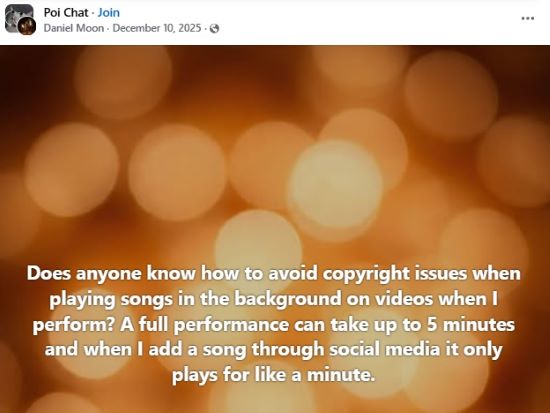
Platforms can still match background music and flag your upload, even when you did not add the song during editing. If you want the full performance online, record in a controlled space or use licensed music you can clear for your channel and distribution plan. Keep proof ready so you can respond fast if a claim appears.
How do I license a popular song for a client video?

Popular songs usually require permission for two sides: the composition and the specific recording, which means sync plus a master use license. Costs and timelines vary by song and usage, so wide online distribution often pushes budgets higher than clients expect. When that clearance process does not fit, use a licensed track built for client delivery and save the proof pack.
Scope, Proof, Publish
When you map the rights, choose a license model, and save proof before you export, music stops being a risk and becomes a tool. Build a proof pack for every project, then reuse your workflow across ads, client deliverables, and channels. That consistency keeps publishing fast and compliant.



Audiodrome was created by professionals with deep roots in video marketing, product launches, and music production. After years of dealing with confusing licenses, inconsistent music quality, and copyright issues, we set out to build a platform that creators could actually trust.
Every piece of content we publish is based on real-world experience, industry insights, and a commitment to helping creators make smart, confident decisions about music licensing.


